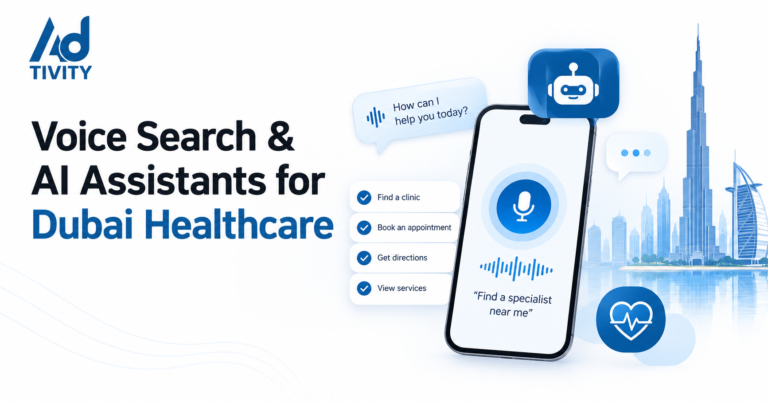
Voice search means a patient speaks a question aloud to a device such as Siri, Google Assistant, or Alexa, which then gives one spoken answer rather than a list of results. Dubai healthcare practices can prepare by writing content that answers real spoken questions directly, keeping their Google Business Profile accurate, and adding structured data so AI tools understand their pages clearly.
More patients in Dubai now ask a device for a doctor, instead of typing a search. “Find me a dentist near me” spoken aloud works very differently to the same words typed. This guide explains how voice search actually works, and what your Dubai healthcare practice needs to do now to stay visible.
What Is Voice Search, and Why Does It Matter for Healthcare?
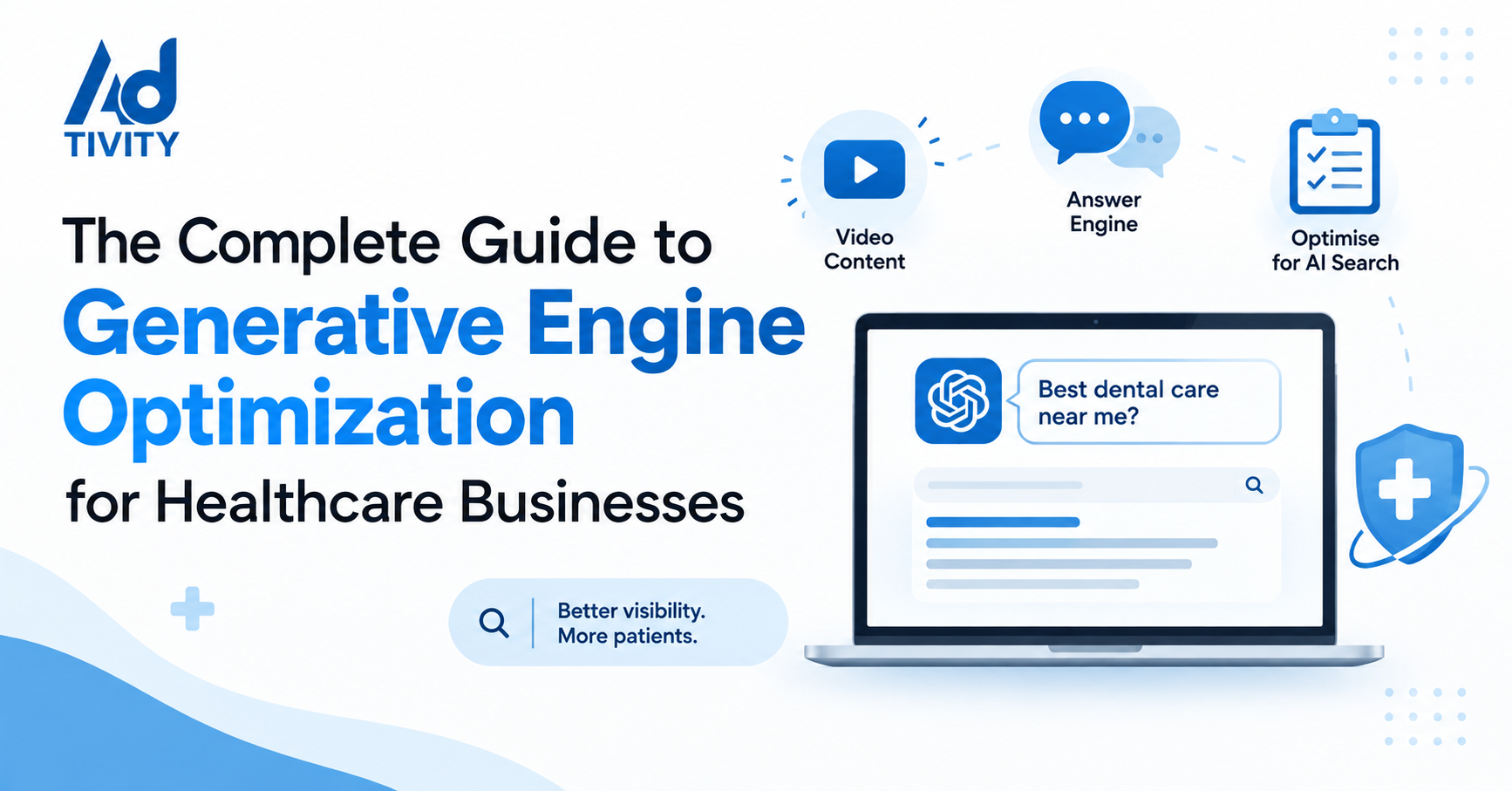
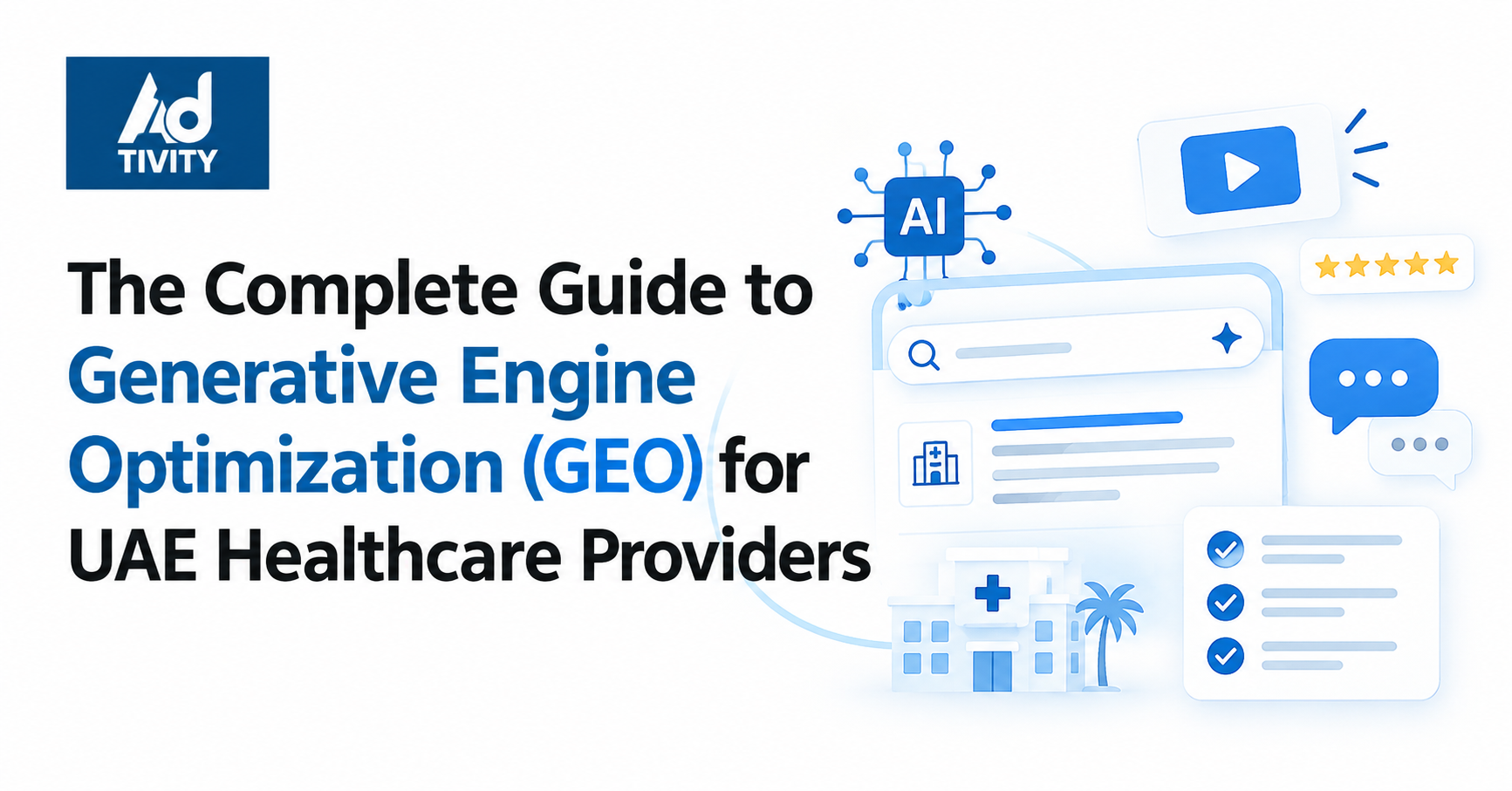
Voice search means a patient speaks a question to a device, such as a phone or smart speaker, instead of typing it. AI assistants like Siri, Google Assistant, and Alexa then read the question and give one spoken answer. In short, your practice either gets named in that answer, or it simply does not get mentioned at all.
Voice search is when someone speaks a question aloud to a device, rather than typing it into a search box. The device then gives one spoken answer, often naming just one or two businesses.
This matters enormously for healthcare. A patient asking “which clinic treats [condition] near me” gets a single answer read aloud. There is no scrolling, no comparing ten results side by side. Either your practice is that one answer, or it is invisible in that moment entirely.
Why This Matters So Much Right Now
Typed searches often use short keywords. Spoken searches sound like real questions. A patient rarely types “best dentist Dubai Marina.” They are far more likely to say “what is the best dentist near me in Dubai Marina.” This difference changes what actually gets found.
Here is why this matters so much right now:
- More UAE residents use voice assistants daily, on phones and in cars
- A voice assistant gives one answer, not a list of ten links to choose from
- Patients trust a spoken recommendation almost instantly
- Most Dubai healthcare practices have not prepared their content for this shift yet
- Getting this right now offers a genuine early advantage
As a result, voice search is not a small trend to watch. It is quietly becoming how many patients take their very first step towards booking.
Picture two similar clinics in Dubai. One has written its website in plain, natural language, with real answers to real patient questions. The other still relies on short, formal keyword phrases written for typed searches years ago. A patient asks their phone a spoken question. Only one clinic gets named in the answer. The care may be equally good at both. The content was not equally ready.
How Patients in Dubai Actually Use Voice Search
Understanding how patients actually speak helps you prepare content that genuinely matches.
Spoken questions differ from typed searches in a few clear ways:
- They sound like full, natural questions, not short keywords
- They often include a specific location, such as a neighbourhood or landmark
- They frequently ask “near me,” expecting a genuinely local answer
- Many patients in the UAE search in both English and Arabic, sometimes within the same day
- Questions often focus on a specific need, such as a symptom or treatment, rather than a general search
Picture a patient stuck in traffic, asking their phone “is there a dentist open near me right now.” A typed search gives them ten results to scroll through while driving. A voice search gives them one spoken answer immediately. Only one clinic gets mentioned in that moment.
How to Optimise Your Practice for Voice Search
Follow this general process to genuinely prepare your practice for voice search, step by step.
Step one is to write content that answers real spoken questions directly. Think about how a patient would actually ask a question aloud, not just which keywords they might type. Step two is to keep your Google Business Profile fully accurate. Voice assistants lean heavily on this data for local answers, so wrong details here get repeated aloud to patients. Step three is to add structured data to your website. This is often called schema, and it helps AI tools understand exactly what your page answers. Step four is to build genuine FAQ content. Short, direct answers to real patient questions match how voice search actually works. Step five is to keep your content in plain, natural language. Voice assistants favour clear, conversational answers over dense, formal text.
Getting these basics right matters more than any single advanced technique. A practice that nails the fundamentals often outperforms one chasing complex tricks without a solid content foundation underneath.
AI Assistants: Beyond Search, Into the Conversation
Voice search gets a patient to notice you. What happens next matters just as much.
Many Dubai practices now use their own AI assistants, such as a WhatsApp chatbot or a voice-based phone assistant, to handle patients once they make contact. This is a different job to voice search itself, but a genuinely connected one.
A good AI assistant can:
- Answer common questions immediately, at any time of day
- Help a patient book an appointment without waiting for a callback
- Support both English and Arabic conversations
- Pass more complex questions on to your own team properly
Used well, this closes the gap between a patient finding you through voice search, and actually becoming a booked patient.
What UAE Regulations Mean for Your AI Assistant
Using AI to handle patient conversations brings genuine regulatory responsibility in the UAE.
A few principles matter here. Patient data handled by any AI assistant falls under UAE data protection law, so consent and secure storage genuinely matter. Regulatory bodies such as DHA, DOH, and MOHAP expect clear standards around how patient information gets used and stored. Arabic language support needs to be genuinely accurate, not just a basic translation layer, since real Gulf Arabic differs noticeably from generic Arabic. National platforms such as NABIDH and Malaffi shape how patient data connects across the wider UAE healthcare system, which your own systems may eventually need to consider.
Getting this right protects both your patients and your practice.
Key Benefits of Preparing Now
Preparing for voice search and AI assistants brings real, practical rewards. For example:
- Earlier visibility. You get mentioned exactly when a patient asks, not buried in a list.
- A genuine head start. Most Dubai practices have not prepared for this shift yet.
- Better patient experience. Clear, direct answers help patients, not just search engines.
- Stronger overall SEO. Content built for voice search also strengthens normal search visibility.
- Smoother patient conversations. A well-built AI assistant closes the gap between a patient finding you and actually booking.
Altogether, these benefits grow as more patients turn to spoken search first.
Frequently Asked Questions
What is voice search in simple terms?
Voice search means asking a device a question aloud, instead of typing it, and receiving one spoken answer back.
How is voice search different from typing a search?
Spoken questions sound like full, natural sentences, while typed searches often use short keywords instead.
Does Google Business Profile matter for voice search?
Yes. Voice assistants often pull local business details directly from it, so accuracy genuinely matters.
Should my practice offer an AI assistant in Arabic?
Yes, ideally with genuine Gulf Arabic accuracy, not just a basic translation of English content.
Do UAE rules apply to AI assistants used by healthcare practices?
Yes. Patient data handled by AI falls under UAE data protection law, with oversight from bodies such as DHA, DOH, and MOHAP.
How soon should a practice start preparing for voice search?
Now. Most Dubai practices have not started yet, so early preparation offers a genuine advantage.
Ready to Prepare Your Practice for Voice Search?
Most Dubai healthcare practices have not prepared for voice search yet. Ad-tivity helps you understand exactly where your practice stands today, then builds a genuine plan to close the gap. Left unaddressed, this gap only grows as more patients turn to voice search and AI assistants first. Competitors who prepare early tend to stay ahead, simply because most practices have not started yet. Get in touch today, and let’s prepare your practice properly for 2026 and beyond.